
Waterfall Kitchen Islands: Are They Worth It for Portland Homes?
Kitchen islands have evolved far beyond simple work surfaces.
In many contemporary Portland homes, the island has become the centerpiece of the entire kitchen—and one of the most dramatic ways to emphasize it is with a waterfall countertop.
Instead of ending at the horizontal edge, the countertop material continues vertically down one or both sides of the island until it reaches the floor.
The result is a continuous architectural feature that puts the slab itself on display.
But is the additional material and fabrication worth it?
For the right kitchen, absolutely.
What Is a Waterfall Countertop?
A traditional island countertop sits horizontally on top of the cabinets and ends at the edge.
With a waterfall design, another piece of slab runs vertically down the side.
The installer carefully joins the horizontal and vertical sections so the countertop appears to “fall” toward the floor.
Quartz, granite, marble-look surfaces and Dekton can all create dramatically different waterfall designs.
Prime Remodel works with these premium slab materials throughout the greater Portland area.
Why Waterfall Islands Work So Well With Stone Slabs
A beautiful slab isn’t simply a work surface.
It can become part of the room’s architecture.
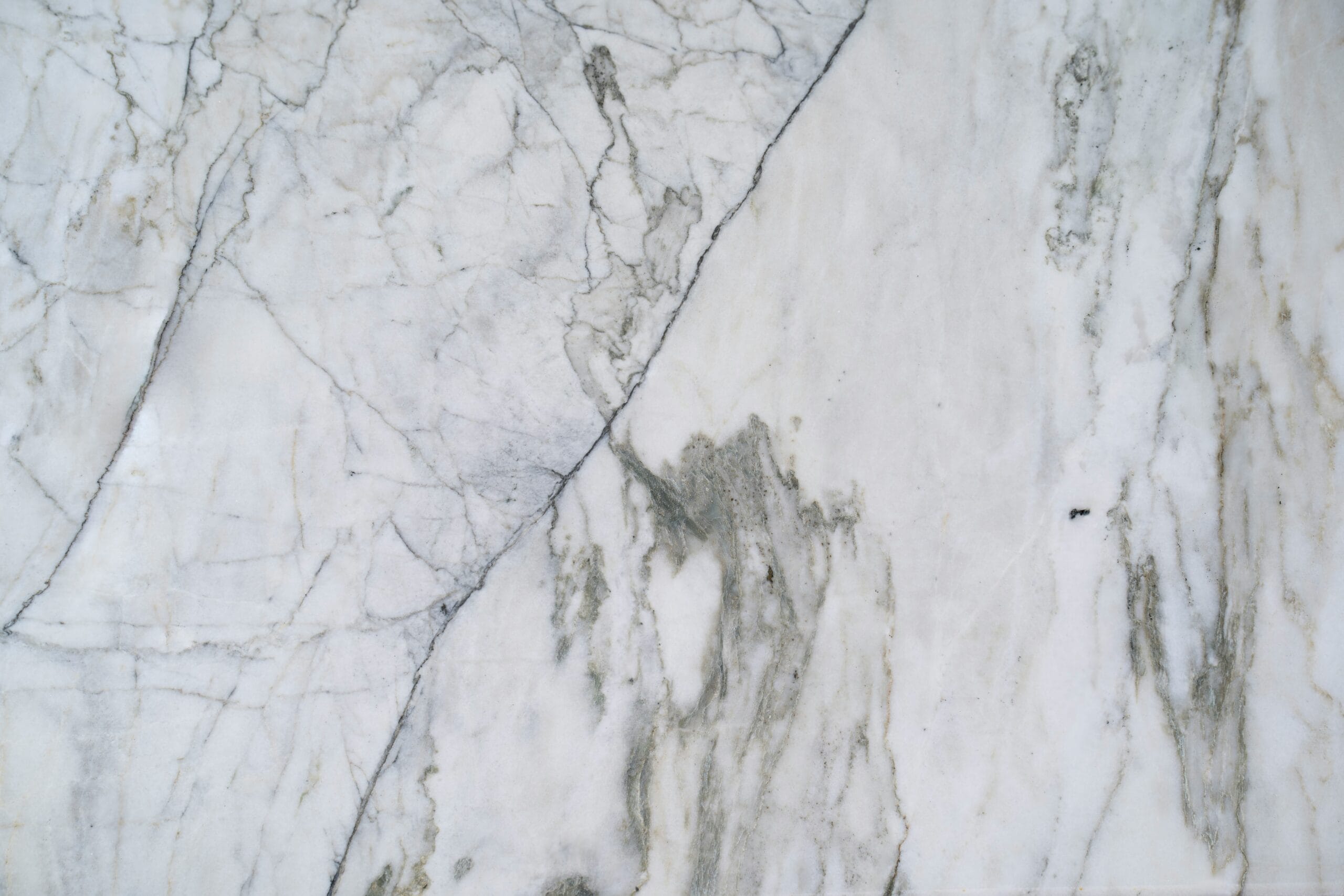
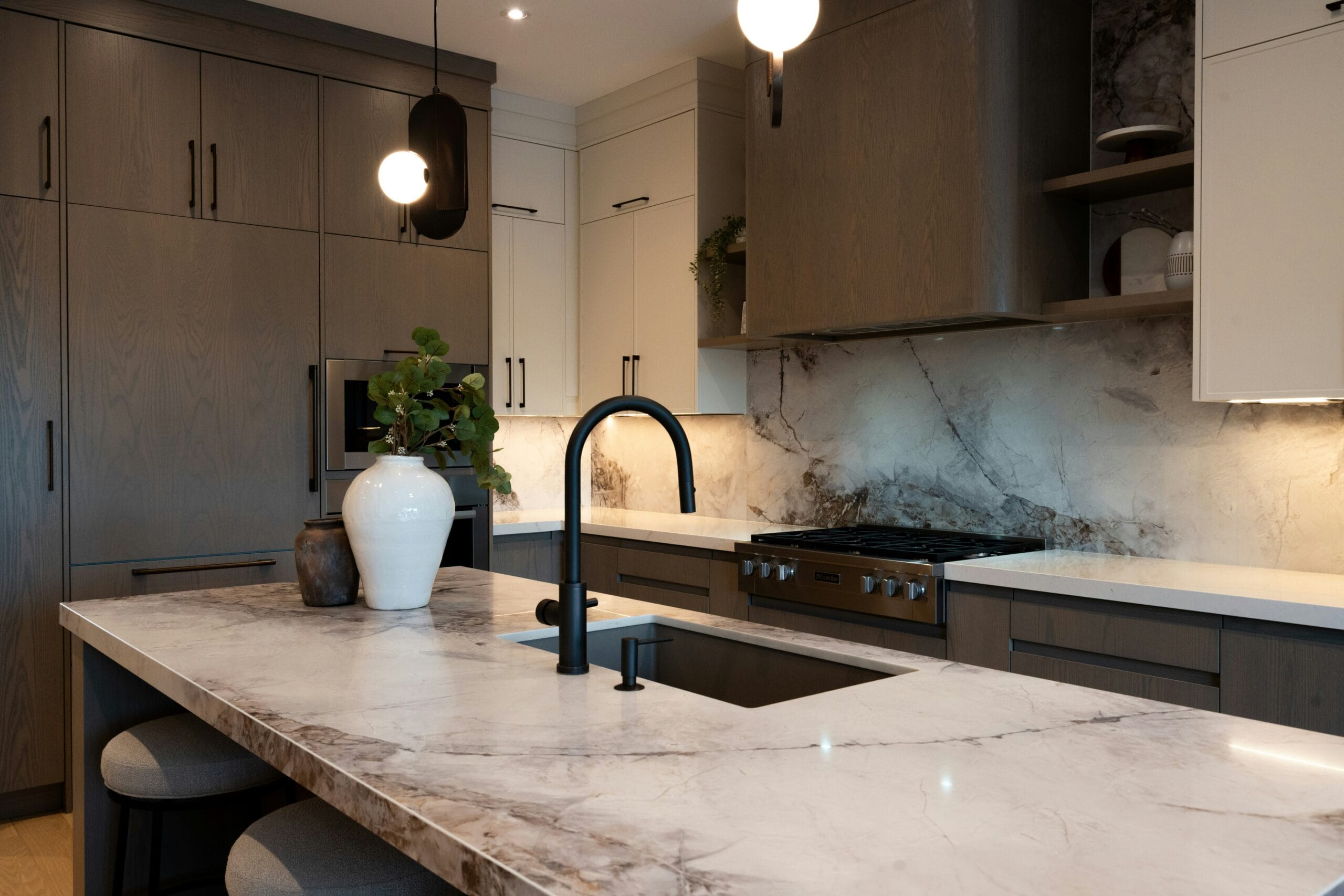
Large veins and natural stone patterns become much more noticeable when the material extends vertically.
Instead of seeing stone only from above, the homeowner sees it immediately when entering the kitchen.
That’s particularly effective with:
Dramatic marble-look quartz, strongly veined natural stone, contrasting dark slabs, warm neutral stone and highly consistent contemporary surfaces.
Vein Matching Makes a Huge Difference
One of the details separating an average waterfall island from a premium installation is vein continuity.
If the countertop contains a noticeable vein, the pattern should ideally appear to continue over the edge and down the vertical panel.
That requires planning the pieces before the slab is cut.
Simply choosing two unrelated sections of the slab can produce an obvious break in the pattern.
Careful slab layout allows the horizontal and vertical pieces to visually connect.
It’s a small fabrication detail that can make a major difference in the finished kitchen.
One-Sided vs. Two-Sided Waterfalls
Not every island needs stone on both ends.
A waterfall on one side can work beautifully when the opposite end connects to cabinetry, seating or another architectural element.
A two-sided waterfall creates a more symmetrical, sculptural appearance.
This is particularly effective with freestanding islands positioned prominently within open-concept kitchens.
The decision should be based on the room rather than automatically choosing two panels.
Do Waterfall Islands Require More Slab Material?
Yes.
A standard island may only require the horizontal countertop.
A waterfall island adds one or two large vertical pieces, which means the project may require significantly more slab material.
That can occasionally mean purchasing an additional slab.
Pattern matching can also affect material efficiency because the fabricator may need to cut pieces from particular parts of the slab rather than whichever locations generate the least waste.
That is why the waterfall design should be decided before purchasing material and finalizing the slab layout.
What Materials Work Best?
Quartz is particularly popular because consistent slab sizing and controlled patterns can make it easier to achieve a clean contemporary look.
Granite brings natural variation and makes every waterfall unique.
Marble produces an unmistakably luxurious appearance but requires the homeowner to accept the maintenance characteristics of natural marble.
Dekton can also work particularly well with contemporary designs. Cosentino produces Dekton in large-format slabs and multiple thicknesses, providing considerable flexibility for islands and other architectural surfaces.
Waterfall Islands and Portland Kitchen Design
A waterfall island pairs particularly well with the clean, natural interiors popular throughout the Portland area.
Think warm wood cabinetry, white or cream stone, matte fixtures and understated lighting.
In those kitchens, the island doesn’t need additional ornamentation.
The slab becomes the visual feature.
A dramatic stone can also create contrast inside a restrained kitchen without introducing another material or color.
Is a Waterfall Countertop Worth the Extra Cost?
A waterfall edge isn’t necessary for functionality.
It’s a design investment.
It makes the most sense when the island is highly visible, you’ve selected a slab worth showcasing and you plan to keep the kitchen for many years.
If the side of the island is barely visible or faces a wall, the additional slab material may be better spent elsewhere.
But when the island anchors an open kitchen and living space, a waterfall installation can turn an ordinary countertop into one of the home’s defining design details.
Build a Statement Island With Prime Remodel & Restoration
The quality of a waterfall island comes down to measurement, fabrication and installation.
Cuts must align correctly. Edges need to meet precisely. Veining should be considered before fabrication.
Prime Remodel & Restoration provides professional slab and countertop installation throughout the greater Portland area, working with quartz, granite, marble, Dekton and other premium surfaces.
Considering a waterfall island for your Portland kitchen? Call Prime Remodel & Restoration at (503) 901-2595 for a free quote.
Or send us a message. We’ll get back to you within 24 hours.